Shifting Focus: Why Learning Outcomes Matter More Than Study Mode
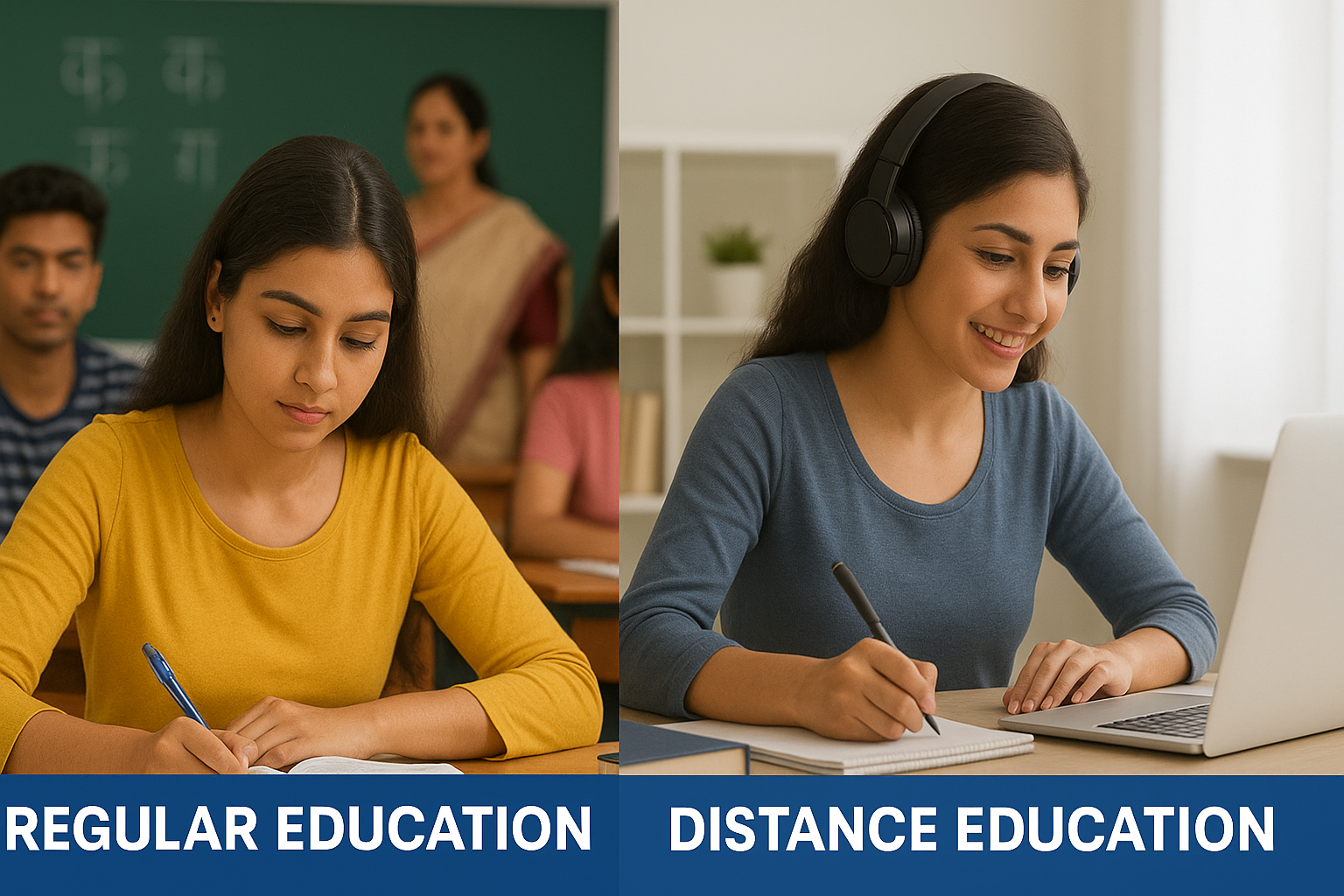
The debate between distance education vs regular education is often misunderstood. In truth, the modern workplace doesn’t judge a candidate by where they studied but by what they can do. Employers now look beyond degrees and focus on capabilities that translate into workplace value.
Recruiters today seek:
- Practical skills — the ability to apply concepts in real tasks.
- Digital literacy — familiarity with productivity tools, analytics, and virtual communication.
- Independent working habits — especially valued in hybrid and remote environments.
- Adaptability — readiness to learn new methods, software, or roles.
- Continuous learning — the willingness to grow beyond academic qualifications.
Whether one acquires these skills through a classroom or an online platform has become secondary. What truly counts is a learner’s mindset, discipline, and outcome.
Inside the New Ecosystem of Distance Learning
The way distance education operates today is far removed from the correspondence courses of the past. Modern learning systems have evolved into rich, interactive ecosystems powered by technology. Learners now engage through Learning Management Systems (LMS), virtual sessions, project-based modules, and AI-driven support tools that personalise their study experience.
This digital environment allows students to:
- Access lectures and assignments anytime, anywhere.
- Participate in live discussions, assessments, and peer reviews.
- Use digital simulations to practise real-world tasks.
- Gain exposure to international course content and professional tools.
More importantly, the system nurtures independent learning — a critical skill in today’s workplaces, where autonomy and accountability are prized. The format encourages students to manage their time, seek solutions proactively, and take ownership of their growth.
Unlocking the Key Advantages of Distance Education
When considering the advantages, one must look beyond convenience. Its real value lies in how it fits into the professional landscape of the modern Indian workforce. Here’s how this model supports career progression:
- Learn while you work: Students can take up jobs, internships, or freelance roles while completing their degrees. This real-world exposure enhances employability from day one.
- Build experience alongside your qualification: By applying theoretical knowledge to live work situations, learners gain both confidence and competence before graduation.
- Affordable yet expansive learning: The cost-effectiveness of open and distance learning allows students to invest in additional certifications — like digital marketing, analytics, or coding — expanding their skillsets.
- Master digital collaboration tools: From project management software to video conferencing platforms, students develop fluency in the tools that drive today’s global businesses.
These advantages make distance education not just a learning option, but a gateway to professional maturity and workplace relevance.
Understanding the Validity of Distance Education in India
The question, is distance education valid in India, often arises from outdated perceptions. The answer is clear: yes, it is fully valid — provided it comes from a UGC-DEB recognised university.
UGC-DEB ensures that only accredited institutions deliver distance programmes that meet academic and professional standards. Degrees from such universities hold equal recognition for:
- Further studies in India or abroad, and
- Employment in both private and government sectors.
Thus, the legitimacy of distance learning in India is well-established, aligning with the country’s vision for inclusive and accessible higher education.
Plan your next career move with expert support.
Speak With UsBuilding Modern Career Skills Through Distance Education
Distance learning nurtures some of the most in-demand skills of the 21st century. Its structure, which emphasises technology-enabled study and self-direction, directly builds competencies valued by employers:
- Digital productivity through online tools and task management platforms.
- Analytical thinking is developed through data-centric assignments and projects.
- Business communication honed via virtual collaboration and presentations.
- Problem-solving abilities are cultivated in case-based learning environments.
- AI-assisted learning that enhances research and project capabilities.
- Practical, project-based exposure mirroring actual workplace challenges.
Each of these translates into tangible job-readiness — a quality recruiters prioritise over grades or attendance records.
What Regular Education Still Offers — And Why It Matters
While distance learning has advanced tremendously, the benefits of regular education retain strengths that remain valuable in specific contexts. Traditional programmes provide:
- Structured guidance from faculty and mentors.
- Collaborative learning through peer interaction and group projects.
- Networking opportunities with alumni and industry representatives.
- Exposure to extracurricular activities that build confidence and leadership.
These experiences enhance interpersonal communication, teamwork, and presentation abilities — traits vital for leadership-oriented careers and industries built on social engagement.
Which Mode Fuels Better Career Growth?
The question of which is better distance or regular education doesn’t have a universal answer — it depends entirely on one’s goals. Each mode offers unique strengths that suit different learner profiles and professional ambitions.
| Aspect | Regular Education | Distance Education |
|---|---|---|
| Learning Structure | Fixed schedules, in-person classes | Flexible, self-paced digital learning |
| Best For | Students seeking academic discipline and social engagement | Working professionals or early job seekers |
| Skill Focus | Collaboration, communication, leadership | Independence, adaptability, multitasking |
| Exposure | On-campus events, physical networking | Real-world work experience during studies |
| Growth Path | Structured progression | Accelerated employability |
Ultimately, both modes can lead to success — the key lies in aligning one’s education style with career goals and personal circumstances.
Job Opportunities: Can I Get a Job With a Distance Degree?
The simple answer is yes — absolutely.
Employers now evaluate skills more than the mode of study. As companies embrace hybrid teams and digital-first roles, graduates from distance programmes often bring exactly what recruiters need: self-management, familiarity with digital tools, and practical exposure through work experience.
Start-ups, remote-first firms, and even global corporations hire candidates who have balanced education with professional experience — often considering them more prepared than classroom-only graduates.
Is Distance Education Valid for Government Jobs?
Another practical concern relates to eligibility for public sector roles. Yes, it is — provided the programme is from a UGC-DEB recognised institution.
Graduates from approved distance courses frequently apply for:
- Banking positions through IBPS and SBI exams.
- Teaching roles after acquiring B.Ed. or related certifications.
- Civil services under PSC/UPSC examinations.
- Railways and PSUs, where degrees are accepted if recognised.
Hence, distance learning doesn’t restrict access to any major public sector opportunity.
Scope of Distance Education
The distance education scope in India has broadened significantly in recent years. Several industries now support blended working models that favour digitally trained graduates. Growth drivers include:
- The rise of online business operations needing skilled remote workers.
- Increased adoption of EdTech in both education and corporate training.
- Growing demand for communication and project management skills.
- Global expansion of Indian companies seeking flexible, tech-savvy talent.
This expanding scope ensures that distance education continues to evolve as a credible and future-ready pathway.
Mapping Career Paths: Choosing the Right Mode for the Right Job
A practical way to decide between the two modes is to see how each aligns with specific job types.
| Career Path | When Regular Education Helps | When Distance Education Excels |
|---|---|---|
| Marketing & Management | Ideal for networking and campus placements | Enables early industry exposure through freelancing or internships |
| Human Resources & Leadership | Builds interpersonal and training skills | Allows HR professionals to upgrade while employed |
| IT & Data Roles | Adds academic grounding for advanced technical learning | Encourages self-paced certification and project building |
| Sales & Business Development | Supports in-person engagement training | Provides on-job learning while studying |
| Operations & Customer Support | Fosters teamwork and structured training | Develops multitasking and remote collaboration skills |
Both systems produce capable professionals — their success depends on how effectively students use each to build experience and credibility.
A Practical Decision Guide for Students
Choosing between regular and distance education should begin with self-assessment. Students should consider:
- Learning preferences — whether they thrive under guidance or independence.
- Financial considerations — distance programmes often allow parallel work.
- Career objectives — whether they aim to join the workforce early or pursue long-term research or leadership.
- Time management — the ability to balance study with employment.
- Future plans — such as international study or competitive exams.
Each factor contributes to identifying which mode aligns best with one’s aspirations and circumstances.
Finding the Right Fit: Your Education, Your Growth
The discussion on distance versus regular education is not about rivalry but relevance. In the modern world, the “better” mode is simply the one that helps you achieve your goals.
For those seeking flexibility, early career advancement, and practical exposure, distance
education provides unmatched opportunities.
For those who value structured mentoring,
collaborative learning, and a defined academic journey, regular education remains ideal.
Both lead to the same destination — a fulfilling career built on competence, confidence, and continuous growth.